 Leak Fix Pros
Slab Leak Detection in Whittier, CA
A slab leak is a leak in a water line that runs under or inside the concrete foundation of your home. You usually cannot see it, so the first job is to prove it is there and locate it to within a few inches.
Short answer: A slab leak is a pressurized water line leaking beneath or inside a concrete foundation. Providers confirm it with a meter test, then pinpoint it with listening equipment, thermal imaging or tracer gas so that only a small section of floor has to be opened. Call (562) 439-3888 to reach an independent Whittier provider.
What slab leak detection involves
Water lines in a slab foundation run through or beneath the concrete. When one of them develops a pinhole, a failed joint or a corroded stretch, water escapes under pressure and works its way into the soil, up through cracks, or along the underside of the slab. Because nothing shows at the surface at first, detection is a process of elimination and measurement, not a visual inspection.
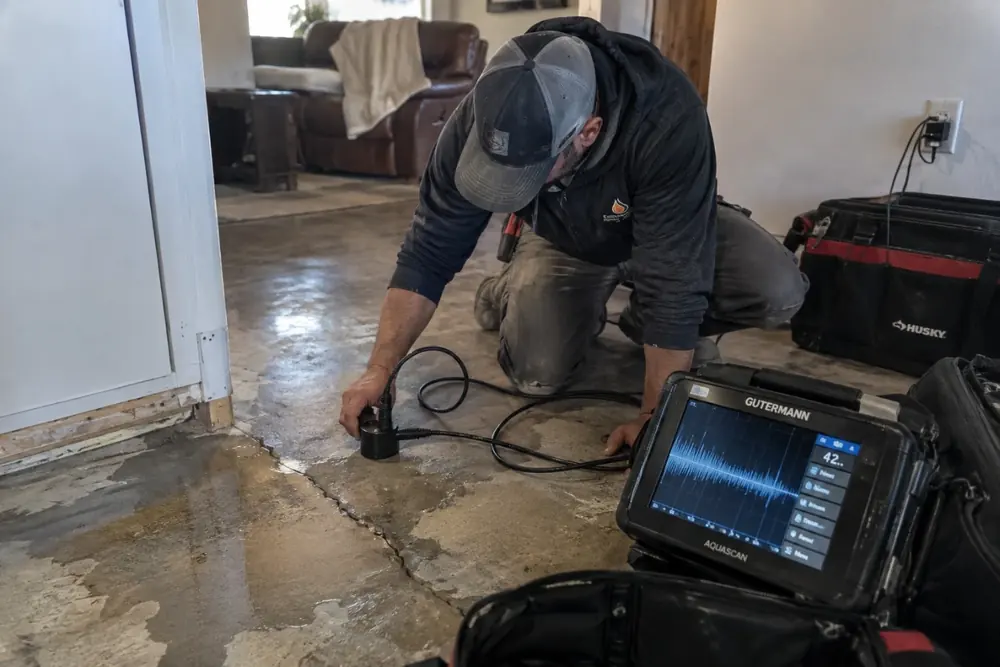
Providers typically start by confirming that water is being lost at all, then work out which line it is on, and only then use precision equipment to mark the exact spot. Doing it in that order matters: it keeps the opening in your floor as small as possible. The same methods are explained in more detail on our page about how acoustic, thermal and tracer-gas leak detection works.
If you are not sure whether your home sits on a slab or on a raised foundation with a crawl space, look for a vented perimeter foundation wall and an access hatch. Homes with a crawl space have different leak patterns, and a provider will usually ask about this on the first call. Our guide to hidden wall and floor leaks covers the raised-foundation case.
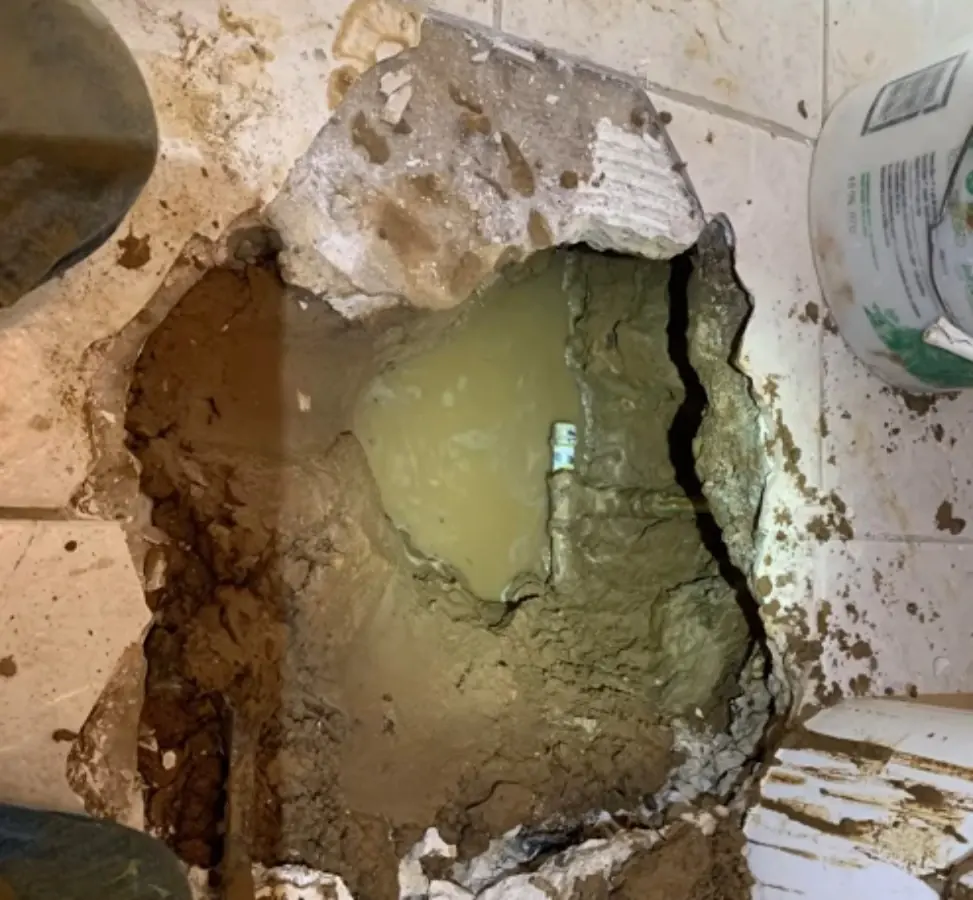
Signs of a slab leak
No single sign proves a slab leak, but several together make it likely. Pay attention to any of these:
- A warm or hot spot on the floor, or floors that feel warm when the heater is off. This points to a leaking hot water line.
- The sound of running or hissing water when every fixture is off.
- A water meter that keeps moving when all water use in the house has stopped.
- A water bill that rises with no change in how many people live in the house or how much you irrigate.
- Damp carpet, lifting laminate or tile, new cracks in tile grout, or a musty smell near the floor.
- Low water pressure at several fixtures, or water that takes longer to turn hot.
- Wet or unusually green patches along the outside of the foundation.
The meter test is the quickest way to separate a real leak from a false alarm. Shut off every tap and appliance, read the meter, wait about two hours without using water, and read it again. The U.S. EPA WaterSense program recommends this test, and a changed reading means water is going somewhere. Our page on high water bill leak detection walks through it step by step.
How a provider finds a slab leak
- Confirm the loss
The provider checks the meter with water use off and may shut the main valve at the house. If the meter stops, the leak is on your side of the home's main shutoff. - Isolate the line
Hot and cold lines are tested separately, and individual branches can be pressure tested to narrow the search to one run of pipe. - Listen and scan
Electronic listening devices pick up the sound of escaping water through the floor. Thermal imaging can show a warm path from a hot line. - Pinpoint and mark
The location is marked on the floor. When sound alone is ambiguous, tracer gas can confirm the exact point. - Review the options
The provider explains the repair options, which can include opening the slab at the marked spot, rerouting the line through walls or attic space, or lining the pipe. See leak repair and pipe lining.
What affects the cost
Prices are set by each independent provider, so this page does not quote any. The factors that usually move a quote are how many lines need to be isolated and tested, how deep and how hard to reach the pipe is, the type of flooring above it, and whether a written report is needed for an insurance claim. Detection is normally priced separately from repair, so ask whether the detection fee is credited if you hire the same provider for the repair.
If you are comparing quotes, ask what the quote includes: the number of lines tested, whether the exact location will be marked and photographed, and whether a report is provided. A report matters if you plan to file a claim, which is covered under insurance leak detection reports.
When to call a professional
Call as soon as the meter test shows movement and you cannot find an obvious source such as a toilet or sprinkler. Water under a slab does not stay put. It can wash out soil, stain and damage flooring, and keep running up your bill for as long as the leak goes unfixed. If you can shut off the main valve while you wait for an appointment, doing so stops the loss at the cost of having no water in the house.
Unsure whether the problem is under the slab at all? A short call can sort it out. Professional leak detection in Whittier begins with questions about what you have seen and heard, and the provider can tell you whether a slab leak is likely.
Slab leaks and Whittier neighborhoods
Whether a slab leak is the likely culprit depends on how your house was built, not on where it sits. In densely built areas such as South Whittier, and in East Whittier, where larger homes and yards are common, owners ask about slab foundations often. Hillside and historic areas such as College Hills can raise different questions about older plumbing and raised foundations. Tell the provider your street and the age of the house and they can narrow the likelihood from the first call.
Frequently asked questions
What is a slab leak?
A slab leak is a leak in a water supply line that runs under or inside a home's concrete slab foundation. Because the pipe is buried, the leak is found by measurement and listening equipment instead of by sight.
How do I know if I have a slab leak or just a high water bill?
A high bill alone does not prove a slab leak. Run the meter test: with all water off, a moving meter means a leak exists. Warm floor spots, the sound of running water and damp flooring point toward the slab specifically.
Can a slab leak be found without breaking the concrete?
Yes. Providers use non-invasive tools such as electronic listening equipment, thermal imaging and tracer gas to mark the leak location from the surface. Concrete is normally opened only at the spot where the leak is confirmed, and only if a spot repair is chosen.
Can my property be damaged if I ignore a slab leak?
A long-running leak can saturate the soil under and around the slab, damage flooring and baseboards, and encourage mold. It also keeps adding to your water bill. A provider can tell you how urgent your situation is.
Is slab leak detection the same as slab leak repair?
No. Detection finds and documents the leak. Repair fixes it. Many providers do both, but they are usually quoted separately, so ask how each is priced.
Related services
- Acoustic, Thermal & Tracer GasHow leak detection works, and which method is used for which problem.
- High Water Bills & Fixture TestsMeter checks, toilet and fixture leak tests, and water loss audits to explain a bill.
- Leak Repair, Pipe Lining & Smart ValvesTargeted repair after detection, trenchless pipe lining, and smart shutoff valves.
- Insurance Claim ReportsWritten leak findings with location, method and photos to support a claim.