 Leak Fix Pros
Leak Repair, Trenchless Pipe Lining and Smart Shutoff Valves in Whittier
Detection tells you where the leak is. Repair is a separate decision, with its own options, costs and tradeoffs. Here is what each approach involves.
Short answer: After a leak is pinpointed, providers can repair it in place, reroute the line, or line the pipe from the inside without trenching. A smart shutoff valve can then monitor your water use and close automatically when it detects a leak. Which is best depends on the pipe's condition, location and your goals.
Targeted leak repair
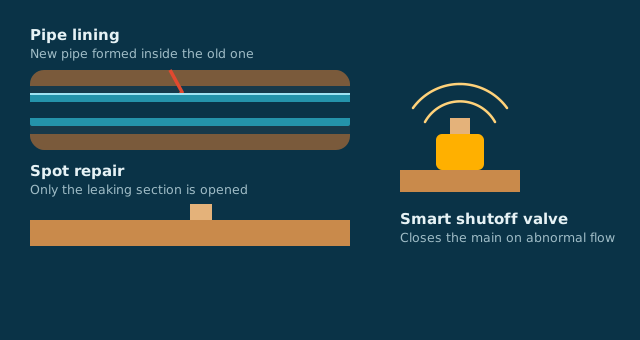
Targeted repair means fixing the leak at its confirmed location and opening as little as possible. Because detection has already narrowed the spot, the opening is often a small section of floor, wall or soil. It is a good fit when the pipe is otherwise in good shape and a single failure has caused the leak.
If the pipe is old, corroded or leaks again after repair, a spot fix may only delay a bigger job. A provider should tell you the condition of the rest of the line, so the decision is made with that information. Combining local leak detection with a repair quote from the same provider can make this easier, as long as the detection finding is documented separately.
Reroute or replace
Rerouting runs a new line, often through walls or the attic, to replace a line buried under a slab or hard to reach. It avoids breaking concrete and gives you accessible plumbing, but it involves more opening of walls and ceilings. Whole-line replacement, often called repiping, replaces old pipe when leaks keep recurring. Common replacement materials are copper and PEX. Ask the provider why they prefer one for your home, and what the permit process is.
Trenchless pipe lining
Trenchless lining repairs a pipe from the inside. The provider cleans the pipe, inserts a resin-saturated liner, and cures it in place to form a new pipe inside the old one. It is used on sewer and drain lines, and some providers offer it for water lines. The key benefit is that it can avoid large excavations under landscaping, driveways and floors.
- Good fit: pipes with cracks, small breaks or root damage, where the overall shape of the line is intact.
- Poor fit: collapsed pipe, severe offsets, or lines with too many fittings and bends.
- Ask about: the pipe diameter after lining, warranty terms in writing, and whether the work needs a permit.
A camera inspection comes first. Our page on sewer video inspection explains how the pipe's condition is documented before lining is considered.
Smart water shutoff valves
A smart shutoff valve is installed on the main water line. It measures flow and can close automatically when it sees a pattern that suggests a leak or a burst, such as water flowing continuously for too long. Many also send an alert to your phone and let you close the valve remotely.
- Best for: homes that are vacant for stretches, rentals, second homes, and anyone who has already had a leak.
- What to ask: whether the valve needs a power supply and Wi-Fi, how it handles a power loss, and whether professional installation is required.
- Limits: the valve stops water at the main. It does not repair a leak, and a very slow drip may not trigger it.
Whether a smart valve earns a discount on your insurance depends on the insurer. Ask the insurer before you buy; see insurance leak detection reports.
Licensing, permits and quotes
Plumbing repair in California is regulated work. Ask each provider for their California contractor license number and verify it on the Contractors State License Board website at cslb.ca.gov before you agree to repair work. Get the scope, the price and any warranty in writing, and ask who pulls permits where they are required.
Leak Fix Pros is a referral service. We do not perform repairs or set prices, and the independent providers we connect you with are responsible for their own licensing, insurance and workmanship.
Frequently asked questions
What is trenchless pipe lining?
It is a repair that creates a new pipe inside an existing one using a resin-saturated liner that cures in place. It avoids digging a trench along the full length of the line.
Is a spot repair enough, or should I repipe?
If one failure caused the leak and the rest of the pipe is in good condition, a spot repair may be enough. Repeated leaks or heavily corroded pipe may justify replacement. A provider can advise after assessing the pipe.
Should I repipe with copper or PEX after repeated leaks?
Both are used. The best choice depends on your home, the water, your budget and local code. Ask the provider to explain why they recommend one over the other, and compare quotes.
How does a smart water shutoff valve work?
It measures water flow at the main. If it detects an abnormal pattern, such as continuous flow, it can close and send you an alert.
Does repair come with detection?
Not necessarily. Detection and repair are often quoted separately, even from one provider. Ask how each is priced.
Related services
- Slab Leak DetectionFind a leaking line under or inside a concrete foundation without guessing.
- Sewer Video InspectionA camera on a flexible cable shows cracks, roots, offsets and blockages in the sewer line.
- Insurance Claim ReportsWritten leak findings with location, method and photos to support a claim.
- Hidden Wall & Floor LeaksStains, bubbling paint or a musty smell with no visible drip: trace the source.