 Leak Fix Pros
Pool and Spa Leak Detection in Whittier, CA
A pool loses water to sun, wind and splash-out all the time. A leak is different: it keeps going when the pump is off, when the weather is calm, and when nobody is swimming.
Short answer: To tell a pool leak from evaporation, run a bucket test: compare the water level inside the pool to a bucket of pool water on a step over 24 hours. If the pool drops more than the bucket, the pool is leaking. A provider then tests the shell, plumbing lines and equipment to find where.
Evaporation or a leak? Start with the bucket test
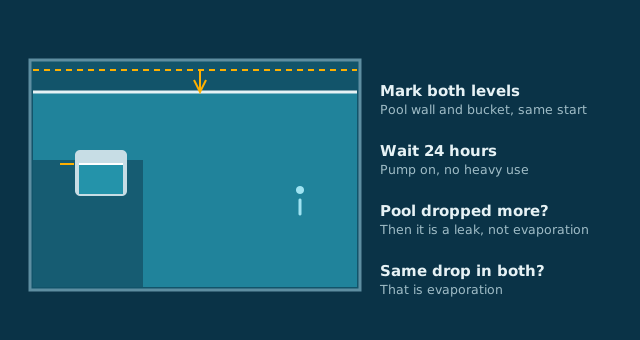
Evaporation depends on heat, sun, wind and humidity, so there is no single number that separates it from a leak. The bucket test makes the comparison on your own pool, on the same days, in the same weather:
- Fill a bucket
Fill a bucket with pool water to about an inch below the top and set it on a pool step so the water inside is at the same level as the pool. - Mark both levels
Mark the water level inside the bucket and the pool level outside it with tape or a waterproof marker. - Wait 24 hours
Run the pump normally, and avoid heavy use or adding water. - Compare
If the pool dropped noticeably more than the bucket, you have a leak. If both fell the same amount, that is evaporation.
Repeating the test with the pump off for a day shows whether the leak is on the pressure side of the plumbing, which only leaks when the pump runs, or in the shell, which leaks all the time. Give those results to the provider on your first call.
Where pool and spa leaks come from
- The shell: cracks in plaster or gunite, failed tile lines, or a worn vinyl liner.
- Fittings: skimmer throats, returns, main drains, lights and jets, where the shell is penetrated.
- Plumbing lines: buried suction and return lines between the pool and equipment pad.
- Equipment: pump seals, filter valves, heaters and unions on the pad.
- Spa jets, spillways, and plumbing in attached spas.
Providers narrow these down by testing each part of the system separately: sealing off lines and pressure testing them, using dye near suspected cracks and fittings, and using listening equipment on pressurized lines.
Signs worth reporting
- Water that has to be added more than usual to keep the level up.
- A level that stops dropping at a certain height, which often points to a leak at that fitting.
- Wet soil, sinking pavers or a soggy patch near the pool or the equipment pad.
- Air in the pump basket or return jets, or a pump that loses prime.
- Cracks in plaster, tile or coping, or a loose or wrinkled liner.
- Unexplained increases in your water bill, which also points to a high-water-bill check at the meter.
What a provider checks
A thorough pool leak inspection usually combines visual inspection of the shell and fittings, pressure testing of the plumbing lines, dye testing at suspected leak points and a check of the equipment. Because this work often reaches buried pipe, the same non-invasive tools explained under leak detection methods apply, including electronic listening and, when needed, tracer gas.
Ask the provider what they will test, whether the repair is quoted separately, and whether leaks in the buried lines will require breaking decking. Some lines can be repaired in place or rerouted, which is covered in leak repair and pipe lining.
Cost and timing
Pool leak inspections vary with pool size, how many plumbing lines there are, whether there is an attached spa and whether the pool has to be partly drained. Providers set their own rates, so ask what is included before you book. Waiting has a cost too: a leaking pool wastes treated water and can undermine soil around the shell.
Pools and spas in Whittier neighborhoods
Pools show up most often on larger lots. Owners in East Whittier, Friendly Hills and Mar Vista Heights ask about pool plumbing more than owners of smaller lots do, and hillside lots add complications with soil movement. If you are looking for water leak detection in Whittier for a pool, mention your pool type, whether there is an attached spa and how old the plumbing is.
Frequently asked questions
How do I detect a swimming pool leak?
Run the bucket test to compare the pool level with a bucket of pool water on a step over 24 hours. If the pool loses more, you have a leak. A provider then tests the shell, fittings, plumbing lines and equipment to find the source.
Is my pool leaking or is it evaporation?
Evaporation affects the pool and the bucket equally. A leak makes the pool drop more than the bucket. Hot, windy and dry days raise evaporation, so compare both on the same days.
Can a pool leak be found without draining the pool?
Often yes. Many tests are done with the pool full, using dye, listening equipment and pressure tests. In some cases a partial drain is used to check a fitting or crack.
What happens if a leak is in the buried pool plumbing?
The line can be isolated and pressure tested. Depending on location, the repair may be a spot repair, a reroute, or lining, and decking may need to be opened.
Do spas leak differently than pools?
Spas have more fittings and jets in a smaller shell, so leaks are often at jets, the equipment pack or the plumbing between the spa and the pad.
Related services
- Irrigation & Yard LeaksSoggy patches, misting sprinklers or a buried service line leaking before the house.
- Acoustic, Thermal & Tracer GasHow leak detection works, and which method is used for which problem.
- High Water Bills & Fixture TestsMeter checks, toilet and fixture leak tests, and water loss audits to explain a bill.
- Leak Repair, Pipe Lining & Smart ValvesTargeted repair after detection, trenchless pipe lining, and smart shutoff valves.