 Leak Fix Pros
Commercial Leak Detection in Whittier, CA
For a business, a leak costs more than the water bill. It can close a space, damage inventory and tenants' property, and create liability. Commercial detection is organized around finding the loss quickly and documenting it.
Short answer: Commercial leak detection starts with a property scan that checks the meter, tests supply lines and common areas, and traces losses to a building, floor or unit. It extends to fire suppression loops and a water loss audit of the whole property, and it produces documentation for owners, tenants and insurers.
What a commercial property scan covers
A commercial scan is a systematic survey of how water moves through a building. A provider checks the main meter and any submeters, tests supply lines, and works through restrooms, kitchens, mechanical rooms, roof drains and irrigation. The goal is a clear answer to which part of the property is losing water and how much.
- Domestic water supply lines and risers, including hot water recirculation lines.
- Restrooms, kitchens and break rooms: flushometers, faucets, dishwashers and ice machines.
- Cooling towers, boilers and mechanical rooms.
- Landscape irrigation, backflow assemblies and exterior hose bibs.
- Below-slab and underground piping serving the building.
The tools are the same ones used at home, scaled up. See acoustic, thermal and tracer gas detection for how they work. Many commercial issues are detected as a pattern in the bills first, which is covered in water loss audits and bill analysis.
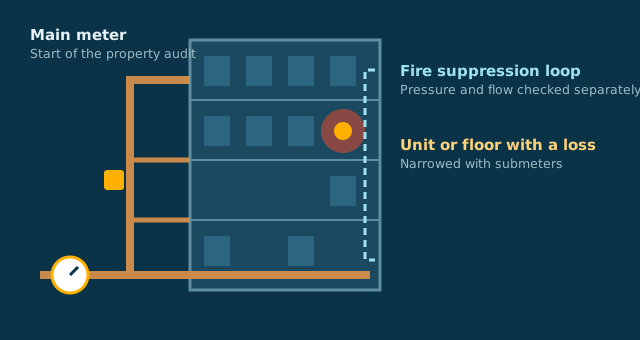
Fire suppression loop testing
Fire sprinkler and standpipe systems are separate water systems with their own piping, valves and loops. A leak in a fire line can show up as a pressure loss, a meter that moves when no one is using water, or damp spots near sprinkler risers. Because these systems protect life safety, the work on them is regulated.
Fire protection work in California is performed by contractors licensed for it. Before any work on a fire suppression system, ask the provider whether they hold the right license, whether they will coordinate with your fire protection contractor, and whether the fire marshal or your insurer must be notified. Never shut down a fire system without making sure the building has the required protection.
Water loss audits for properties
A property water loss audit compares billing history, meter readings and fixture counts with what the building should use. It usually flags a short list of suspects: a running flushometer, an irrigation zone stuck on, a failing backflow or a below-slab line. For tenants in multi-unit buildings, tests are often done unit by unit so the loss can be traced to a unit or a common line.
Planning around business hours
Ask the provider how they schedule around your operations. Testing a restaurant kitchen or a retail floor often works best outside business hours, and some tests need areas to be empty or shut off. Tell the provider upfront about food safety, medical or security areas that need escorting or must remain operating.
Documentation
Ask for a written report with locations, photos and the method used. It helps with landlord and tenant disputes, work orders and insurance claims; see insurance leak detection reports. Owners often use the same report to decide between a spot repair and larger work such as pipe lining or rerouting.
Commercial areas in Whittier
Businesses cluster around Uptown Whittier, the historic shopping district centered on Greenleaf Avenue, where older and renovated buildings sit side by side, and along other commercial corridors across the city. Whatever the location, professional leak detection in Whittier can begin with a short call about your building type, age and the symptoms you see.
Frequently asked questions
What does a commercial leak detection scan include?
Meter and submeter checks, supply line testing, fixture and appliance checks, irrigation, backflow assemblies and underground lines, with findings documented by location.
Can a leak in a fire sprinkler line be found?
Yes, but it must be handled by a provider licensed for fire protection work. Pressure loss or a moving meter with no water use can be signs. Coordinate with your fire protection contractor.
How do I find which unit is leaking in a multi-unit building?
Providers test units separately, using submeters where available, and isolate common lines. This narrows the loss to a unit or a shared line.
Can testing happen after hours?
Often, but it depends on the provider and the property. Ask when you call.
Do I get a report?
Ask for one before the visit. A written report with locations and photos is useful for owners, tenants and insurers.
Related services
- High Water Bills & Fixture TestsMeter checks, toilet and fixture leak tests, and water loss audits to explain a bill.
- Acoustic, Thermal & Tracer GasHow leak detection works, and which method is used for which problem.
- Insurance Claim ReportsWritten leak findings with location, method and photos to support a claim.
- Leak Repair, Pipe Lining & Smart ValvesTargeted repair after detection, trenchless pipe lining, and smart shutoff valves.